
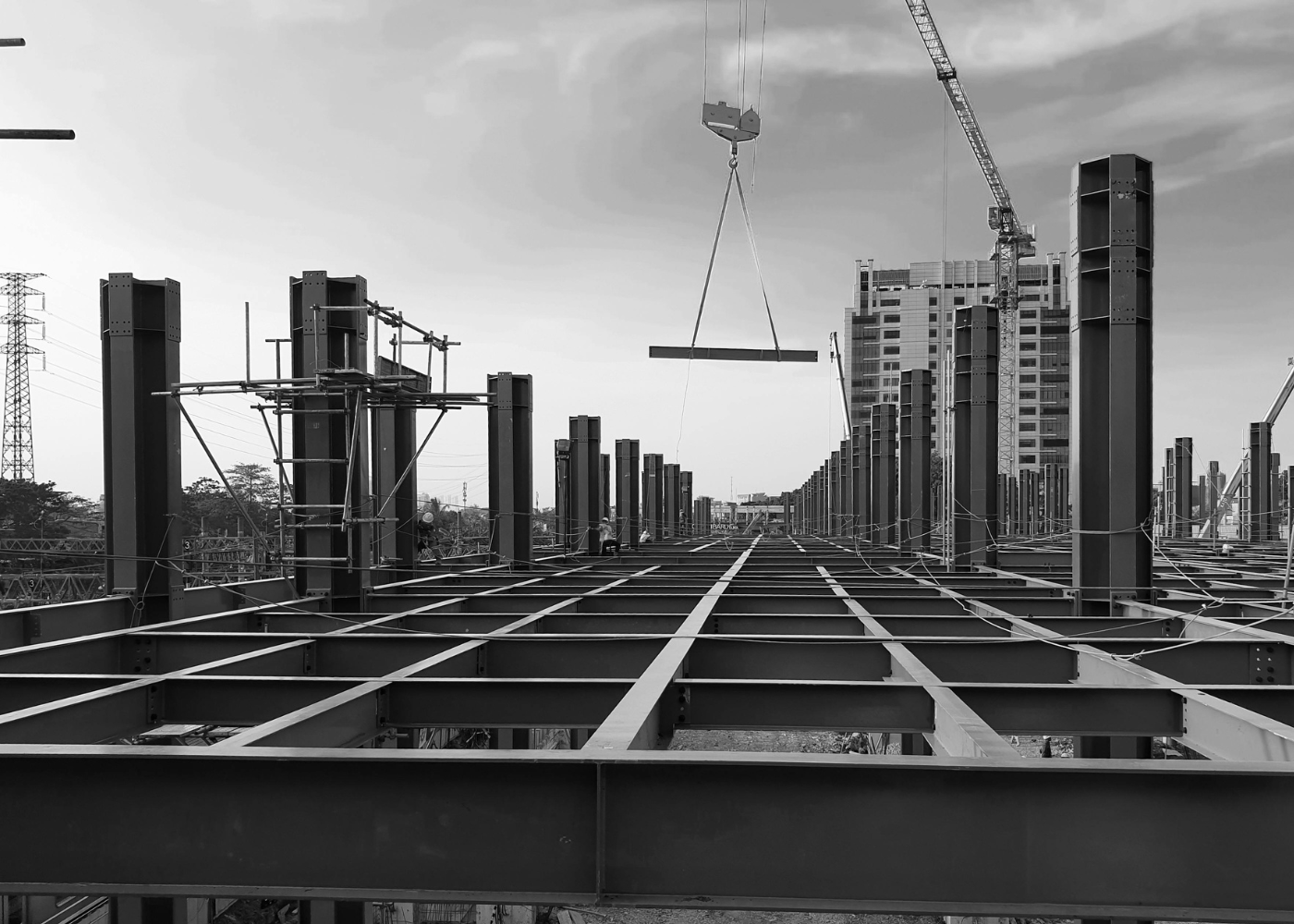
How Portfolios Are Built
Once investors understand diversification, the next question becomes: how should a portfolio actually be constructed?
Today there are thousands of investment products available: mutual funds, ETFs, index funds, actively managed funds, sector funds, international funds, bond funds, and more. The challenge is not finding investments. The challenge is building a portfolio where the pieces work together coherently over time.
At Pacific Asset Management, portfolio construction begins with a relatively simple belief: markets are difficult to predict consistently, so portfolios should be built around discipline, diversification, and long-term structure rather than short-term forecasting.
The Foundation: Broad Market Exposure
One of the most important developments in modern investing has been the rise of index investing. Vanguard was one of the earliest and most influential proponents of this approach.
Traditional index funds seek to track a market benchmark as closely as possible. The S&P 500, for example, tracks large U.S. companies, while indexes such as the Russell 2000 and MSCI EAFE track smaller U.S. companies and developed international markets.
Index investing shifted the focus away from constantly trying to identify winning stocks or time market movements. Instead, investors could participate broadly in markets through diversified, low-cost funds.
This remains an important foundation for many portfolios today.
Beyond Traditional Indexing
Over time, some investment firms began asking a different question:
Can portfolios maintain the diversification and discipline of indexing while also emphasizing characteristics that research has associated with higher expected returns over long periods?
This led to approaches sometimes referred to as evidence-based investing or engineered indexing. Dimensional Fund Advisors and Avantis have become well known for applying these principles within diversified portfolios.
Traditional index funds generally seek to mirror the market exactly as it exists. If a company becomes larger within the market, the fund automatically allocates more to it because its market value has increased. If the benchmark changes its holdings, the index fund also changes its holdings. This sometimes results in buying a stock when other index funds are buying.
Dimensional and Avantis also begin with broad market exposure, but take a more measured and flexible approach. Rather than strictly mirroring an index, they systematically adjust portfolios toward characteristics that academic and empirical research have historically associated with higher expected returns over time. These characteristics include smaller company size, lower relative prices (“value”), and stronger profitability.
Importantly, this is not traditional stock picking. The portfolios remain diversified and rules based. Rather than attempting to predict next quarter’s winning company, the goal is to emphasize broad segments of the market that have historically provided identified, favorable return characteristics over long periods.
Portfolio Construction Is About Balance
Building portfolios also involves balancing competing priorities.
Investors seeking long-term growth may hold portfolios weighted more heavily toward equities. Investors seeking greater stability or income may allocate more toward fixed income. Tax considerations, account types, and international exposure all play important roles as well.
For example, taxable accounts may emphasize tax-efficient investments, while retirement accounts may be better suited for investments that generate higher taxable income distributions. International investing may also involve considerations around currency exposure and global diversification.
The goal is not to create a “perfect” portfolio, but to create a thoughtful structure aligned with an investor’s goals and circumstances.
The Role of Discipline
One of the most difficult parts of investing is not technical, but rather emotional.
Markets will always experience volatility, uncertainty, recessions, headlines, and changing leadership. Market declines are a normal part of long-term investing, including periodic corrections and bear markets. A well-built portfolio is designed not only to pursue long-term returns, but also to remain durable through changing market environments.
That is why we believe portfolios should be:
• broadly diversified
• globally oriented
• cost-conscious
• tax-aware
• disciplined over time
The Bottom Line
Successful investing is usually not about finding the perfect stock or predicting the next winning market.
More often, it is about building a portfolio that participates broadly in global markets, balances different sources of return, and remains consistent through changing market cycles.
In many ways, portfolio construction is less about prediction and more about preparation.